

-

About Us
Ningbo Zhenhai Jinjinnaichi (NJJ) Bearing Co., Ltd. is a national high-tech enterprise specializing in the production of small-sized thin-wall low-noise deep-groove ball bearings.
-
Products
The company insists on relying on technological progress, adopting advanced technology and introducing advanced equipment, and is committed to the development and development of low noise bearings.
-

News
Now has more than 130 automatic production lines, equipped with a full set of advanced bearing testing equipment, has a full set of automatic assembly line, the use of automatic line in one step.
-

Contact
At present, the company selects the high-quality supplier resources in the industry, supporting the supply of bearing steel, steel ball, cage, dust cover and a series of raw materials


Maximizing Efficiency: The Benefits of Ball Bearings in Industrial Machinery
Time:
2024-05-25
In the world of industrial equipment and components, the use of ball bearings plays a crucial role in ensuring smooth and efficient operation. These small, spherical bearings are designed to reduce friction and support radial and axial loads, making them essential components in a wide range of machinery and equipment. In this article, we will explore the advantages of using ball bearings in industrial machinery and how they can help maximize efficiency and performance.
**What are Ball Bearings?**
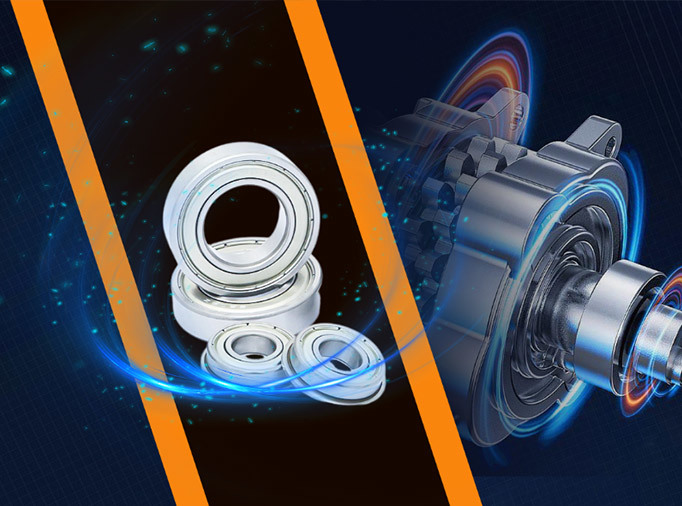
Ball bearings are precision-engineered components that consist of a series of small balls enclosed within a ring. These bearings are designed to reduce friction between moving parts and support loads in various directions, allowing for smooth and efficient operation. In industrial machinery, ball bearings are used in a wide range of applications, including motors, conveyor systems, pumps, and more.
**Advantages of Using Ball Bearings**
1. **Reduced Friction**: One of the primary advantages of using ball bearings in industrial machinery is their ability to reduce friction between moving parts. This results in smoother operation, lower energy consumption, and extended equipment lifespan.
2. **High Load Capacity**: Ball bearings are capable of supporting both radial and axial loads, making them versatile components for a variety of industrial applications. Their ability to withstand heavy loads without deformation ensures reliable performance under high-stress conditions.
3. **Low Maintenance**: Compared to other types of bearings, ball bearings require minimal maintenance due to their simple design and robust construction. This results in reduced downtime and lower maintenance costs for industrial machinery.
4. **High Speed Operation**: Ball bearings are known for their high-speed capabilities, allowing industrial machinery to operate efficiently at various speeds. This makes them ideal for applications that require precision and reliability at high rotational speeds.
5. **Noise and Vibration Reduction**: The smooth operation of ball bearings helps reduce noise and vibration in industrial machinery, resulting in a quieter and more comfortable working environment. This is especially important in settings where noise levels need to be minimized for safety and employee well-being.
**FAQs**
1. **Are ball bearings suitable for heavy-duty industrial applications?**
- Yes, ball bearings are designed to withstand heavy loads and high-speed operation, making them ideal for a wide range of industrial applications.
2. **How do ball bearings reduce friction in industrial machinery?**
- Ball bearings use small balls to separate moving parts, resulting in smoother operation and reduced friction between components.
3. **What maintenance is required for ball bearings in industrial machinery?**
- Ball bearings require minimal maintenance, typically limited to periodic lubrication and inspection for wear and damage.
4. **Can ball bearings be used in high-temperature environments?**
- Specialized ball bearings are available for high-temperature applications, allowing industrial machinery to operate effectively in extreme conditions.
5. **What are the common sizes of ball bearings used in industrial machinery?**
- Ball bearings come in a variety of sizes and configurations to suit different industrial applications, ranging from small motors to large conveyor systems.
**Conclusion**
In conclusion, the advantages of using ball bearings in industrial machinery are clear: reduced friction, high load capacity, low maintenance, high-speed operation, and noise reduction. By incorporating ball bearings into your equipment, you can optimize efficiency, improve performance, and extend the lifespan of your machinery. Experience the benefits of ball bearings in industrial applications and take your operations to the next level.
Related recommend
Share
-
-
linkedin
-
VKontakte
-
YouTube
-
Twitter
-
TikTok
-
instagram
-
WhatsApp
-
E-mail

SERVICE HOTLINE
Add:No. 9, Fengshuidun Road, Luotuo Street, Zhenhai District, Ningbo City
Tel:0086-574-86583010
Fax:0086-574-86575268
Mob:+86 15869336060
E-mail:njjbearing@gmail.com
WhatsAPP:+008615869336060/+0086 15857406704
Copyright©2023 Ningbo Zhenhai JinjinnaichiBearing Co., Ltd. Powered by 300.cn SEO