

-

About Us
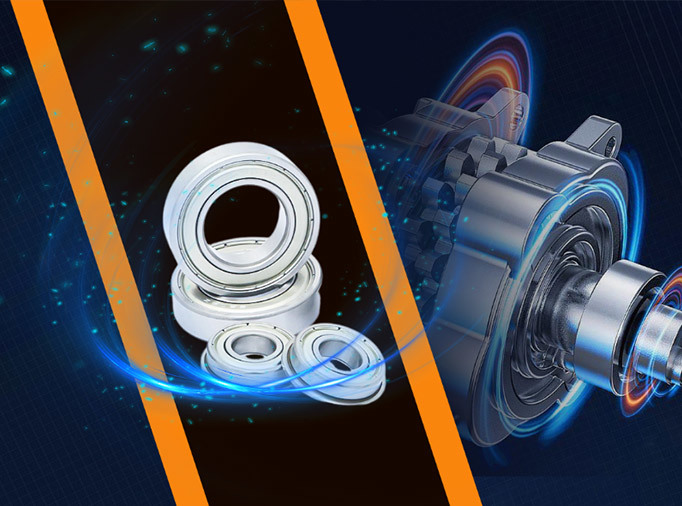
Ningbo Zhenhai Jinjinnaichi (NJJ) Bearing Co., Ltd. is a national high-tech enterprise specializing in the production of small-sized thin-wall low-noise deep-groove ball bearings.
-
Products
The company insists on relying on technological progress, adopting advanced technology and introducing advanced equipment, and is committed to the development and development of low noise bearings.
-

News
Now has more than 130 automatic production lines, equipped with a full set of advanced bearing testing equipment, has a full set of automatic assembly line, the use of automatic line in one step.
-

Contact
At present, the company selects the high-quality supplier resources in the industry, supporting the supply of bearing steel, steel ball, cage, dust cover and a series of raw materials


History and Development of Thin Wall Deep Groove Ball Bearing
Time:
2026-06-26
The thin wall deep groove ball bearing represents the evolution of bearing engineering toward smaller, lighter, and more efficient rotating systems. As industries moved from large machines to compact and high-performance equipment, the demand for bearings that can deliver performance in restricted spaces accelerated.
Early deep groove ball bearing foundation
Deep groove ball bearings have a long history. The basic concept - a deep raceway groove that supports radial loads and moderate axial loads - proved effective for smooth rotation and manufacturability. As industrial bearing production matured, deep groove ball bearings became one of the most widely used bearing types globally.
Why “thin wall” became necessary?
In later decades, equipment designers faced a growing challenge: modern products increasingly required:
• Reduced size and weight
• Compact layouts
• Simplified assembly
• Lower power consumption and friction
• Higher rotational speed and better stability
Traditional deep groove ball bearings could be too thick for certain designs. This led to the development of thin wall structures, where bearing ring cross-sections are reduced while maintaining acceptable load capacity and stiffness.

Key development trends
Thin wall deep groove ball bearings advanced through several engineering directions:
1. Improved materials and heat treatment
Higher-quality steels, optimized heat treatment processes, and better surface finishing improved fatigue life and running stability.
2. Optimized ball/raceway design
Raceway geometry refinements helped control internal clearance behavior and contact characteristics under load.
3. Better cage and guidance systems
Modern cages support stable ball guidance, especially at higher speeds, helping reduce noise and wear.
4. Enhanced sealing and lubrication solutions
As bearings were integrated into sealed motor systems and compact units, manufacturers developed better seals and improved lubrication practices to reduce contamination and extend life.
5. Manufacturing precision and dimensional control
Thin wall designs are more sensitive to installation accuracy. Advances in grinding, measurement, and assembly tolerances made thin wall bearings more reliable in real-world usage.
Today’s applications and outlook
Now, thin wall deep groove ball bearings are used in motors, robotics, appliances, automation, and many other compact systems. The future development direction is likely to focus on:
• Better fatigue and wear resistance
• Lower friction materials and lubrication technologies
• Higher speed stability and noise reduction
• Stronger sealing performance for harsh environments
NJJ BEARING can help you compare bearing versions, materials, clearance concepts, and sealing/lubrication choices according to your design requirements.
Previous article
Previous article
Related recommend
Share
SERVICE HOTLINE
Add:No. 9, Fengshuidun Road, Luotuo Street, Zhenhai District, Ningbo City
Tel:0086-574-86583010
Fax:0086-574-86575268
Mob:+86 15869336060
E-mail:njjbearing@gmail.com
WhatsAPP:+008615869336060
Copyright©2023 Ningbo Zhenhai JinjinnaichiBearing Co., Ltd. Powered by 300.cn SEO