

-

About Us
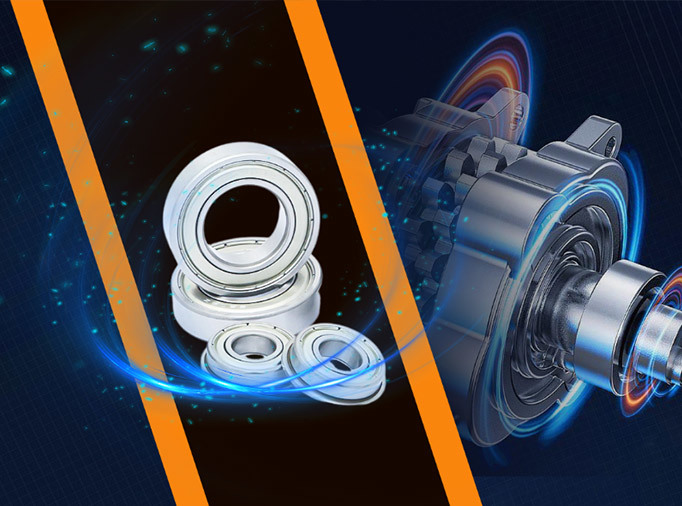
Ningbo Zhenhai Jinjinnaichi (NJJ) Bearing Co., Ltd. is a national high-tech enterprise specializing in the production of small-sized thin-wall low-noise deep-groove ball bearings.
-
Products
The company insists on relying on technological progress, adopting advanced technology and introducing advanced equipment, and is committed to the development and development of low noise bearings.
-

News
Now has more than 130 automatic production lines, equipped with a full set of advanced bearing testing equipment, has a full set of automatic assembly line, the use of automatic line in one step.
-

Contact
At present, the company selects the high-quality supplier resources in the industry, supporting the supply of bearing steel, steel ball, cage, dust cover and a series of raw materials


How to Choose a Suitable Bearing (Thin Wall Deep Groove Ball Bearing Focus)
Time:
2026-07-15
Choosing the right bearing is more than selecting a standard size. For thin wall deep groove ball bearings-where installation space and stiffness are critical-correct selection directly affects life, reliability, noise level, and maintenance cost.
1) Confirm loads: radial and axial requirements
Deep groove ball bearings primarily support radial loads, and also handle moderate axial loads. Start by evaluating:
• radial load magnitude (including shock/vibration if applicable)
• expected axial load direction and amount
• load variations under real operating conditions
If axial loads are large or highly dynamic, you may need a different bearing type or modified design.
2) Check speed and temperature
Bearing life and grease/oil behavior depend strongly on operating speed and temperature. Consider:
• maximum RPM and acceleration cycles
• ambient and working temperature
• lubrication type compatibility with temperature
Thin wall bearings often appear in compact motors where heat buildup can be more concentrated-accurate temperature consideration matters.
3) Select correct internal clearance and fit
Internal clearance influences running accuracy and thermal behavior. Typical selection steps:
• choose appropriate clearance to match your shaft/housing fits and operating temperature
• ensure good alignment (misalignment can be more harmful in thin wall applications)
• confirm fit type (press fit or transition fit) per your design

4) Evaluate lubrication and sealing
Thin wall bearings are often used in compact, sealed systems. Determine:
• grease lubrication or oil lubrication (based on your environment)
• grease type and service interval requirements
• sealing method (e.g., contact/non-contact) to resist dust, moisture, or contaminants
If contamination is likely, sealing and lubrication selection becomes essential.
5) Consider mounting structure and stiffness
Because the bearing cross-section is smaller, the mounting system affects performance. Pay attention to:
• shaft/housing material and rigidity
• machining accuracy and dimensional tolerances
• coaxiality and alignment during installation
• vibration susceptibility of the whole assembly
6) Noise and smoothness expectations
If your application requires quiet operation (e.g., motors, household devices), specify:
• running accuracy requirements
• surface finishing level expectations
• acceptable noise level and test standards
7) Use a correct bearing life calculation
For reliable selection, apply bearing life calculation using your loads and speed. Ask the supplier for:
• basic dynamic load rating (C) and static load rating (Co) data
• expected life under your duty cycle
• suitability assessment based on your environment
Quick Checklist for Buyers
✅ Correct load assessment (radial/axial)
✅ Verified speed & temperature conditions
✅ Proper internal clearance & fit selection
✅ Right lubrication and sealing strategy
✅ Mounting accuracy and alignment
✅ Life calculation and performance expectation confirmation
Related recommend
Share
-
-
linkedin
-
VKontakte
-
YouTube
-
Twitter
-
TikTok
-
instagram
-
WhatsApp
-
E-mail

SERVICE HOTLINE
Add:No. 9, Fengshuidun Road, Luotuo Street, Zhenhai District, Ningbo City
Tel:0086-574-86583010
Fax:0086-574-86575268
Mob:+86 15869336060
E-mail:njjbearing@gmail.com
WhatsAPP:+008615869336060/+0086 15857406704
Copyright©2023 Ningbo Zhenhai JinjinnaichiBearing Co., Ltd. Powered by 300.cn SEO